

Sustainability · 2025
In this section49 topics
- Sustainability Policy3 items
- Sustainability Goals & UN SDGs3 items
- Policy Review3 items
- Business Value Chain1 item
- Stakeholder Analysis2 items
- Environmental Policy & Guidelines4 items
- Environmental Policy Review3 items
- Energy — Plan & Guidelines2 items
- Energy — Electricity Consumption1 item
- Energy — Fuel Consumption2 items
- Energy — Targets2 items
- Energy — Performance & Outcomes2 items
- Water — Plan & Guidelines2 items
- Water — Withdrawal, Discharge & Consumption1 item
- Water — Targets2 items
- Water — Performance & Outcomes2 items
- Waste — Plan & Guidelines2 items
- Waste — Generation, Disposal & Recycling1 item
- Waste — Targets2 items
- Waste — Performance & Outcomes2 items
- GHG — Plan & Guidelines3 items
- GHG — Emissions1 item
- GHG — Emissions Verification2 items
- GHG — Principles & Standards1 item
- GHG — Targets1 item
- GHG Targets — Net Zero1 item
- GHG — Performance & Outcomes2 items
- Environmental Legal Incidents1 item
- Social Policy & Guidelines4 items
- Social Policy Review3 items
- Social — Principles & Standards Practised1 item
- Human Rights Due Diligence2 items
- Employees — Plan & Guidelines3 items
- Employees — Workforce1 item
- Employees — Remuneration & Provident Fund1 item
- Employees — Training & Development1 item
- Employees — Occupational Health & Safety1 item
- Employees — Labour Relations1 item
- Employees — Employee Representation2 items
- Employees — Targets2 items
- Employees — Performance & Outcomes2 items
- Customers — Plan & Guidelines3 items
- Customers — Satisfaction Results1 item
- Customers — Targets2 items
- Customers — Performance & Outcomes2 items
- Community & Social — Plan & Guidelines3 items
- Community & Social — Targets2 items
- Community & Social — Performance & Outcomes2 items
- Law Violation Incidents1 item
Sustainability Policy
Has a Sustainability Policy
Yes
Policy Description
The Company has a “Sustainability Policy” that integrates practices based on the Sufficiency Economy Philosophy, as well as international sustainability and social responsibility criteria and standards. These include adherence to the UN Global Compact (UNGC), the S&P Global Corporate Sustainability Assessment (S&P Global CSA), Sustainable Development Goals (SDGs), sustainability assessment from Morgan Stanley Capital International (MSCI), International Organization for Standardization (ISO) quality measurement standards, and preparation for the FTSE Russell ESG Scores assessment criteria, which the stock exchange will officially adopt in 2026, to elevate the Company's ESG performance. Furthermore, it analyzes stakeholder needs and expectations, aligning them with the vision, direction, and business strategies, serving as an organizational sustainability framework. Performance is monitored and reported according to GRI (Global Reporting Initiative) guidelines to reflect the commitment to sustainable business development throughout the value chain.
The Company has established a policy for sustainable business development alongside the environment and society, comprehensively covering current and future sustainability issues. This policy considers the current operations of the Bangchak Group, new businesses both domestically and internationally, emerging risks, and global sustainability trends, encompassing 9 aspects of sustainability as follows:
-
Stakeholder engagement
-
Good corporate governance
-
Conducting business with fairness
-
Responsible production of goods and services and promotion of a sustainable society
-
Comprehensive sustainability assessment for new businesses
-
Investment in new innovative businesses for sustainability
-
Efficient management of resources and environment
-
Promoting human rights to drive a sustainable economy
-
Promoting sustainable social development
Policy Document Link
https://www.bangchak.co.th/storage/document/sustainability/2023/sustainability-policy-en.pdf
Sustainability Goals & UN SDGs
Has Sustainability Goals
Yes
Goals Description
In 2025, the Company has established sustainability goals in response to the United Nations Sustainable Development Goals (UNSDGs) across 8 categories, consistent with environmental, social, governance, and economic dimensions, which have been approved by the Sustainability and Corporate Governance Committee, as follows:
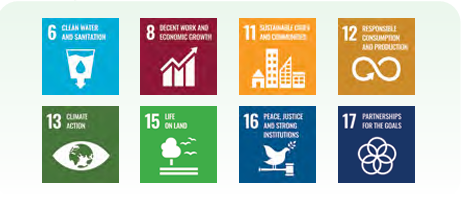
UN Sustainable Development Goals
| SDG Goal |
|---|
| Goal 6 Clean Water and Sanitation |
| Goal 6 Clean Water and Sanitation |
| Goal 8 Decent Work and Economic Growth |
| Goal 8 Decent Work and Economic Growth |
| Goal 11 Sustainable Cities and Communities |
| Goal 11 Sustainable Cities and Communities |
| Goal 12 Responsible Consumption and Production |
| Goal 12 Responsible Consumption and Production |
| Goal 13 Climate Action |
| Goal 13 Climate Action |
| Goal 15 Life on Land |
| Goal 15 Life on Land |
| Goal 16 Peace, Justice and Strong Institutions |
| Goal 16 Peace, Justice and Strong Institutions |
| Goal 17 Partnerships for the Goals |
| Goal 17 Partnerships for the Goals |
Policy Review
Policy Reviewed This Year
Yes
Policy Changed This Year
Yes
Review Details
1. Revise the "Business Responsibility Policy for Respecting Human Rights" to enhance its alignment with labor practices, consistent with the International Labor Organization's (ILO) Declaration on Fundamental Principles and Rights at Work, in its definitions.
2. Establish a "Stakeholder Engagement Policy" to align with good corporate governance principles and international ESG criteria, covering the process of identifying impacts, strategizing operations for communities and local stakeholders, including vulnerable groups.
Business Value Chain
Value Chain Description
The Company prioritizes and actively engages with stakeholders in full alignment with our vision, “Crafting a Sustainable World with Evolving Greenovation.” We have established comprehensive feedback mechanisms to capture stakeholder voices, which are utilized to drive continuous operational improvements, manage sustainability, and define Key Performance Indicators (KPIs) across the entire business value chain. Our framework spans from upstream activities—including crude oil and feedstock sourcing, and the logistics of raw materials for production—to downstream operations, such as oil refining, product development, procurement, product transportation, and the distribution of goods and services. This strategic approach ensures we respond effectively to the diverse needs and expectations of all stakeholder groups, striking an optimal balance between corporate value and business valuation. Furthermore, this commitment fosters enduring relationships and reinforces stakeholder confidence in the Company’s operational integrity.
Stakeholder Analysis
Introduction
The Company is committed to driving a sustainable energy transition while maintaining the critical balance between energy security and quality of life and well-being. This mission necessitates active engagement with all stakeholders; thus, formal grievance and feedback mechanisms, as well as operations tailored to meet stakeholders' needs and expectations, are paramount. The Company has developed diverse identification models and engagement strategies—including multi-channel communication and participation frameworks—implemented at appropriate frequencies to align effectively with the lifestyles and professional environments of our stakeholders. This ensures the acquisition of accurate data to inform the Company’s strategic planning, striking a vital balance between business valuation and corporate value. Furthermore, these initiatives build institutional trust and proactively mitigate adverse impacts on stakeholders. The Company categorizes its stakeholders into ten distinct groups: Employees, Business Partners, Customers, Service Station Operators, Competitors, Creditors, Investors, Neighboring Communities, the Media, and Government Agencies.
Stakeholder Analysis
| Stakeholder Type | Stakeholders | Stakeholder Expectations | Response to Expectations | Communication Activities |
|---|---|---|---|---|
| Internal stakeholders | 2921 · Description: Employees | 1. Remuneration and welfare
2. Retaining the employee
3. Career development
4. Performance management
5. Operational processes
| Driving human resource management under the "100x Happiness" strategy, we embrace the "Best Employer" approach alongside our core corporate values, “vr bcp.” Our management principles are rooted in fairness and non-discrimination. We continuously review and elevate our employee development systems to remain agile amidst business transformations, executing through four key strategic pillars: The Great Place to Work, Unlock Future Potential, Synergy to be the Best, and RUN Capabilities. | 2938 · Description: Visit · 2942 · Description: Internal Meeting · 2946 · Description: Employee Engagement Survey · 2949 · Other name: "vr bcp" leadership activities to catalyze corporate core values · Description: Others · 2949 · Other name: One-on-One Program to expand collaborative space for strategic alignment and engagement · Description: Others |
| External stakeholders | 2899 · Description: Suppliers | General Business Partners
1. Procurement process agility (transparency and trust in business partnerships)
2. Digital transformation readiness
3. Streamlined and user-friendly procurement system for bidding
4. Communication channels for supplier product and service offerings
Fuel Transport Contractors (Road and Marine)
1. Optimized and accurate transportation allocation in alignment with contractual and strategic plan agreements
2. Establishment of fair and non-discriminatory rules and operational guidelines
3. Collaborative enhancement of fuel transportation efficiency to maximize net revenue per transport vehicle
4. Development of delivery quality and safety, preventing environmental impact, and ensuring timely responsiveness to customer demands
5. Transparent and impartial supplier performance evaluation
Strategic Raw Material Procurement Partners
1. Consistency in feedstock procurement
2. Fair and transparent procurement
3. Flexibility for seamless operations and crude oil intake
4. Timely payment for goods/services and punctual document delivery
| A systematic procurement process, spanning from policy formulation, supplier selection and development to group-level performance monitoring. This is executed through the One Procurement strategy and Shared Service model, covering indirect goods and services for all group companies. These operations are governed by the Bangchak Group Way of Conduct and the Procurement Way of Conduct to ensure transparency and fairness. Management is further enhanced through Digital Transformation, the integration of ESG criteria into supplier assessments, and fostering supplier engagement through sustainability recognition. Furthermore, Synergy initiatives are implemented to drive operational efficiency, optimize costs, and fortify supply chain resilience, ensuring long-term sustainable growth for the Group. | 2938 · Description: Visit · 2943 · Description: External Meeting · 2947 · Description: Satisfaction Survey · 2948 · Description: Training / Seminar · 2949 · Other name: Procurement synergy strategic planning · Description: Others · 2949 · Other name: Transport supplier performance evaluation to enable self-assessment and benchmarking against other contractors · Description: Others |
| External stakeholders | 2923 · Description: Customers | General End Users
1. Strategic location and convenient accessibility
2. The ultimate fueling experience
3. Compelling customer loyalty program
4. Swift and agile service within acceptable timeframes
5. High-performance fuels that enhance engine efficiency
6. Relentlessly innovating, optimizing, and pioneering innovation
Industrial Clients
1. Developing products tailored to evolving market demands
2. Advancing technical consultancy services to resolve product-related issues
3. Expanding sales reach across international markets
Wholesale Clients
1. Delivering product education and pioneering innovative marketing models to accommodate market expansion
2. Implementing sales promotions and competitive pricing models
3. Increasing both the volume and sales proportion of automotive products
| Driven by a commitment to product and service excellence that meets consumer needs, Bangchak has consistently executed its customer-confidence roadmap across both existing and new segments. This includes the rebranding and modernization of over 2,200 service stations under the “Bangchak” brand, as well as the implementation of rigorous service standards and on-site quality control. Product development, service enhancements, and customer experiences are unified under the "Your Greenovative Destination for Intergeneration" concept, aiming to lead in green innovation through a diverse range of offerings. Bangchak aspires to be an all-in-one destination that fulfills every customer requirement while driving sustainable business growth. | 2938 · Description: Visit · 2941 · Description: Online Communication · 2943 · Description: External Meeting · 2947 · Description: Satisfaction Survey · 2948 · Description: Training / Seminar · 2949 · Other name: Customer research · Description: Others · 2949 · Other name: Market research · Description: Others · 2949 · Other name: Customer behavioral insights derived from POS and CRM systems · Description: Others · 2949 · Other name: Department of Energy Business (DOEB) data · Description: Others · 2949 · Other name: Customer Service Division · Description: Others |
| External stakeholders | 2936 · Other name: Service Station Operators · Description: Others |
1. Enhanced financial performance
2. Oversight by marketing representatives
3. Supporting and overseeing service station standards to ensure competitiveness
4. Delivering efficient equipment repair
5. High-impact sales promotions and effective advertising programs
6. Development of premium, high-quality products
7. Punctual, complete and loss-free fuel delivery services
8. Implementing robust contingency plans and operational measures to address diverse scenarios
9. Operational continuity and service availability even during emergencies
10. Post-incident remedial and recovery measures
11. Prioritizing strategic collaboration initiatives
| Developing and upgrading standard service stations while reinforcing their brand image to ensure competitive readiness in both infrastructure and service excellence | 2941 · Description: Online Communication · 2943 · Description: External Meeting · 2945 · Description: Complaint Reception · 2948 · Description: Training / Seminar · 2949 · Other name: Marketing representative · Description: Others · 2949 · Other name: Mystery Shopper · Description: Others · 2949 · Other name: Department of Energy Business (DOEB) data · Description: Others |
| External stakeholders | 2898 · Description: Competitors | 1. Operating with transparency under the principles of fair trade and competition
2. Extending assistance to competitors during emergency situations impacting their operations
| Conducting business under free-market mechanisms and in strict adherence to the legal frameworks | 2939 · Description: Press Release · 2941 · Description: Online Communication · 2949 · Other name: Monitoring performance and market conditions through Department of Energy Business (DOEB) data · Description: Others · 2949 · Other name: Analyzing competitor data through financial reports and presenting insights to relevant stakeholders · Description: Others · 2949 · Other name: Collaborating and coordinating with competitors on initiatives requested by the public sector · Description: Others · 2949 · Other name: Providing market insights that maintain a non-prejudicial stance toward competitors · Description: Others |
| External stakeholders | 2894 · Description: Creditor | 1. Strict adherence to loan and debenture covenant obligations
2. Providing swift and precise corporate information
3. Opportunities for comprehensive banking services while fostering robust strategic partnerships
4. Maintaining regular engagement, dialogue, and information updates with financial institutions
| • Strict adherence to all loan and debenture covenant obligations
• Complying with financial institution regulations
• Providing accurate data to credit analysts
| 2941 · Description: Online Communication · 2943 · Description: External Meeting · 2948 · Description: Training / Seminar |
| External stakeholders | 2904 · Description: Investors or investment institutions | 1. Maintaining consistent and attractive dividend payout ratios with strong potential for capital gains.
2. Delivering strong performance and sustainable long-term business growth, underpinned by responsible operations in alignment with sustainable development goals
3. Establishing clear targets and future growth directions, ensuring capital efficiency, and investing in ventures that yield optimal returns
4. Ensuring accurate, transparent, and timely disclosure of material information, with a strategic focus on factors impacting financial performance or corporate risk profiles
5. Easily accessible communication channels with rapid, professional response times
6. Prioritizing and disclosing ESG performance data in alignment with rating criteria to support informed investment decisions
| • Maintaining dividend payout ratios at levels comparable to industry peers
• Executive management participating in performance disclosures and addressing inquiries
| 2941 · Description: Online Communication · 2944 · Description: Annual General Meeting (AGM) · 2949 · Other name: Disclosing information to ESG Rating Agencies through the completion of questionnaires and ESG performance assessments · Description: Others · 2949 · Other name: Conducting investor relations activities across online and offline platforms · Description: Others · 2949 · Other name: Disclosing information to ESG Rating Agencies through the completion of questionnaires and ESG performance assessments · Description: Others · 2949 · Other name: Upholding corporate governance and transparency by providing disclosures that reflect actual performance, including risk management frameworks, growth strategies, and relevant ESG issues · Description: Others |
| External stakeholders | 2902 · Description: Community | 1. Operating with safety as a core priority and mitigating potential environmental impacts on surrounding communities
2. Proactively communicating and providing advance notice to neighboring communities before initiating operations to prevent misunderstandings or misrepresented impacts
3. Organizing comprehensive community relations programs and inclusive engagement initiatives that cater to diverse segments, including vulnerable groups, children, and the elderly, to ensure broad and equitable participation
| • Enhancing the quality of life and well-being of surrounding communities, with the Bangchak Phra Khanong Refinery serving as the primary hub, while meticulously mitigating potential negative impacts on communities and the environment
• Conducting annual community opinion surveys facilitated by independent third-party agencies
• Monitoring and analyzing the Environmental Impact Assessment (EIA) parameters within a 5-kilometer radius, with in-depth data collection focused on the 0–1.5 kilometer range, to aggregate environmental impact data alongside community needs and expectations. These insights are utilized to optimize operational practices and enhance community relations initiatives, reflecting our commitment to friendliness, social utility, safety, confidence, and communal unity
| 2938 · Description: Visit · 2940 · Description: Social Event · 2941 · Description: Online Communication · 2945 · Description: Complaint Reception · 2947 · Description: Satisfaction Survey · 2949 · Other name: Annual community engagement assessments and opinion surveys conducted by independent third-party agencies · Description: Others |
| External stakeholders | 2929 · Description: Media | 1. Providing updates on corporate progress, business operations, growth trajectories, and expansion plans for the relevant business
2. Facilitating exclusive interviews with senior management to deliver specialized content and bespoke insights
3. Senior executives providing insights and articulating business visions for the energy and related sectors to enhance news credibility and drive engagement
4. Preparing engaging and accurate press releases and visual content, backed by rapid response times
| • Responding to media inquiries and requirements
• Conducting press conferences and media interviews
• Supporting mass media activities | 2938 · Description: Visit · 2939 · Description: Press Release · 2941 · Description: Online Communication · 2943 · Description: External Meeting · 2949 · Other name: Conducting surveys of media needs and expectations through direct engagement and dialogue · Description: Others · 2949 · Other name: Participating in and supporting media events by providing products, such as Inthanin beverages, for various functions and special occasions · Description: Others |
| External stakeholders | 2931 · Description: Government agencies and Regulators | 1. Full compliance with legal requirements and obligations, including air emission standards, waste management, wastewater treatment, and discharge protocols.
2. Operating in alignment with government policies, supporting regulatory agency operations, and ensuring the provision of accurate, complete, and timely information
3. Upholding social and environmental responsibility and fostering sustainable community coexistence, underpinned by robust safety and environmental management systems
4. Leading the organization with transparency and good corporate governance, while upholding anti-corruption principles and ensuring accurate, verifiable disclosure of information
| • Monitoring legal updates and regulatory developments, and duly informing relevant business units
• Monitoring business operations across the organization to ensure full compliance with legal and regulatory requirements
| 2938 · Description: Visit · 2943 · Description: External Meeting · 2948 · Description: Training / Seminar · 2949 · Other name: Identify stakeholder needs and expectations through proactive consultations, strategic dialogues, and comprehensive opinion surveys · Description: Others |
Environmental Policy & Guidelines
Has an Environmental Policy
Yes
Policy Description
In addition to its commitment to sustainable business development, the Company has established multifaceted environmental policies to address rapid climate and natural resource changes, sustainability trends, and stakeholder expectations. Consequently, the Company utilizes two core policies to drive its environmental agenda: the Safety, Security, Occupational Health, Environment, and Energy (SSHEE) Policy, and the Biodiversity and No Deforestation Policy.
Policy Document Link
https://www.bangchak.co.th/storage/document/sustainability/2023/bcp-shee-en.pdf
Environmental Guidelines
| Guideline |
|---|
| Electricity Management |
| Fuel Management |
| Renewable/Clean Energy Management |
| Water Management |
| Waste Management |
| Biodiversity Management |
| Greenhouse Gas and Climate Change Management |
| Air Quality Management |
| Noise Pollution Management |
Environmental Policy Review
Policy Reviewed This Year
Yes
Review Details
Updated the “Safety, Security, Occupational Health, Environment, and Energy Policy” to ensure full alignment with international standards
Sustainability: Focusing on prioritization, action planning, and setting quantitative targets to elevate occupational health and safety performance. This includes integrating internal and external stakeholder feedback to refine environmental policies and ensure full alignment with the S&P Global Corporate Sustainability Assessment (CSA) criteria.
Safety: Enhancing the clarity of the 3E operational principles and demonstrating a firm commitment to the Company’s safety management and emergency preparedness.
Environment: Declaring our commitment and intent toward achieving climate change resilience targets.
Asset Management: Incorporating operational principles aligned with ISO 55001 Asset Management standards.
Policies & Guidelines Changed
| Change | Other — Please Specify |
|---|---|
| Other | Safety, Health, Environment, and Energy Policy |
Energy — Plan & Guidelines
Has an Energy Management Plan
Yes
Plan Description
The Company has established energy consumption targets for the Bangchak Phra Khanong Refinery based on the energy usage in production units, measured as a percentage of Fuel Oil Equivalent per Barrel of capacity (%FOEB). This target has been developed from the 2024 baseline (%FOEB 5.20). Due to the upward trend in domestic fuel demand, the Company has increased production capacity accordingly. Consequently, the 2025 energy consumption target is projected to be similar to the actual energy values from 2024. Furthermore, as the average refining capacity is expected to increase in 2025—driven by high oil prices and refining margins following a significant rise in global and domestic fuel demand—energy consumption within the production units will decrease. This is because energy usage comprises a "base" portion for operation and a "top-up" portion; as refining capacity increases, the "top-up" portion per unit decreases, thereby improving overall energy efficiency.
Energy — Electricity Consumption
Electricity Consumption
| Metric | Current Year | Previous Year | Two Years Ago |
|---|---|---|---|
| Total electricity consumption within the organization (Kilowatt-Hours) | 14,994,832.64 | 19,532,668.95 | 15,847,000.04 |
| Electricity purchased for consumption from non-renewable energy sources (Kilowatt-Hours) | 14,981,262.52 | 19,517,494.1 | 15,827,608.81 |
| Electricity purchased or generated for consumption from renewable energy sources (Kilowatt-Hours) | 13,570.12 | 15,174.85 | 19,391.23 |
Energy — Fuel Consumption
Fuel Consumption
| Metric | Current Year | Previous Year | Two Years Ago |
|---|---|---|---|
| Crude oil (Barrels) | 0 | 0 | 0 |
| Coal (Metric tonnes) | 0 | 0 | 0 |
| Jet fuel (Litres) | 0 | 0 | 0 |
| Diesel (Litres) | 111,458.85 | 79,436.2 | 120,907.96 |
| Gasoline (Litres) | 67,549.84 | 112,416.87 | 96,471.14 |
| Fuel oil (Litres) | 0 | 0 | 0 |
| Natural gas (Standard cubic feet) | 9,819,342,961.75 | 9,471,074,894.94 | 8,918,090,670.22 |
| LPG (Kilograms) | 104,916.03 | 6,859,908.52 | 9,431,663.86 |
| Steam (Metric tonnes) | 0 | 0 | 0 |
Other Fuels
| Fuel | Unit | Current Year | Previous Year | Two Years Ago |
|---|---|---|---|---|
| Fuel gas | 1671 · Description: kBTU | 4,824.09 | 4,151.29 | 4,684.89 |
Energy — Targets
Has Set Targets
Yes
Targets
| Target | Target Year | Target Change (%) | Unit | Unit — Please Specify |
|---|---|---|---|---|
| Reduction of electricity purchased and fuel consumption | 2,025 | 0.09 | Others | % of fuel oil equivalent barrels (%FOEB) |
Energy — Performance & Outcomes
Has Performance Results
Yes
Performance Description
The Company monitors significant energy-consuming equipment annually and seeks advanced technologies for its production processes. This includes encouraging employees to participate in the related Energy Improvement Project, which focuses on continuous energy reduction, production efficiency, and yield enhancement. The Company has achieved ISO 50001 certification, an energy management system audited by external bodies. Such a process enables systematic analysis of energy consumption data, identification of high-usage areas, and discovery of opportunities for efficiency improvements, ensuring transparency and confidence in energy management. Results are reported annually to the Department of Alternative Energy Development and Efficiency (DEDE). Furthermore, the Company provides ongoing opportunities for employees to present their work at international knowledge-sharing forums on energy reduction with COSMO Oil in Japan. This initiative helps elevate the Company’s energy management efficiency to align with leading global energy firms. Energy consumption reduction is driven through refinery development projects and the continuous monitoring of initiatives established since 2019. These projects focus on enhancing energy efficiency, including:
Project to install gas engine generators to replace steam turbine generators
Project to reduce natural gas consumption in heat recovery steam generators (HRSG 1/2)
Project to optimize and reduce high-pressure steam consumption for Steam Turbine Generator
Additionally, the Company successfully reduced energy consumption by improving production process efficiency, resulting in a 0.12% reduction in FOEB. At the same time, Bangchak service stations primarily utilize electricity purchased from external grids. Buildings and functional spaces are designed in compliance with legal standards while incorporating green innovations, such as the use of natural light and energy-efficient electrical equipment, to reflect environmental friendliness. Furthermore, Bangchak Green Net Co., Ltd., in collaboration with BCPG Public Company Limited, has developed a Solar Rooftop Installation Project for Bangchak service stations to increase the proportion of renewable energy usage. For Inthanin Coffee shops, air conditioning systems have been transitioned to solar-powered units across 49 branches, consistently reducing both electricity costs and carbon dioxide emissions. The Company also encourages Bangchak service station operators to consider installing Solar Rooftops to promote a low-carbon society by providing consultancy and installation services to interested operators to help reduce their expenses.
Energy management in office buildings and business centers, which primarily use electricity and fuel, involves a range of measures to enhance energy efficiency and reduce greenhouse gas emissions. These actions align with LEED (Leadership in Energy and Environmental Design) standards, for which the Company has been awarded LEED Commercial Interior (CI) Platinum. Additionally, monthly energy audits are conducted to identify opportunities for improvement and establish policies for temperature control and energy use, ensuring electricity consumption targets are met. The Company has implemented the following energy reduction projects in its office buildings:
1. Energy System Improvements- Utilizing LED lighting throughout the entire headquarters. - Implementing Smart Solutions, including Smart Meetings, Smart Office, and Digital Signage. - Installing a Building Management System (BMS) for automated lighting and air conditioning control. - Selecting electrical appliances that meet Energy Star standards.
2. Adopting Clean Energy Vehicles - Expanding the electric vehicle fleet to include 9 EVs and 4 Hybrid vehicles. - Installing 14 EV charging stations at the Head Office and Bangchak Phra Khanong Refinery.
3. Campaigning and Fostering Corporate Culture - Setting the air conditioning temperature to 26C.
- Encouraging the shutdown of computer screens when not in use. - Promoting the Check-out system for Smart Meetings before the scheduled end time, along with using the Smart Meeting system to turn off the air conditioning 30 minutes before the end of the meeting and switch the system to automatic fan mode to circulate existing cool air.
- Implementing measures to adjust air conditioning operation times to minimize electricity usage during peak load periods.
Water — Plan & Guidelines
Has a Water Management Plan
Yes
Plan Description
Bangchak Phra Khanong Refinery serves as the Company’s primary operational site, accounting for the largest share of water consumption in the production process—specifically for cooling systems and steam generation for oil refining. Consequently, the Company is acutely aware of the risks and impacts associated with water withdrawal from various sources for its activities and production, as well as the treatment processes required prior to discharge. To address these factors, the Company has implemented the following operational strategies:
- Implement the 3Rs principle (Reduce, Reuse & Recycle) to enhance water usage efficiency through consumption reduction, internal reuse, and the upgrading of wastewater treatment systems for recycling.
- Optimize water management through the integration of advanced tools and cutting-edge technologies.
The Company conducts comprehensive corporate risk assessments regarding water use across multiple dimensions, including water quality and quantity, regulatory changes and pricing structures, and potential stakeholder conflicts over water resources. This process involves analyzing site locations for water stress using global standards such as the World Resources Institute’s AQUEDUCT Water Risk Atlas and The Global Facility for Disaster Reduction and Recovery’s (GFDRR) ThinkHazard! tool. By continuously monitoring drought conditions, flood risks, and fluctuations in Chao Phraya River levels, the Company has identified that it operates in a high-water-stress area. Consequently, the Company prioritizes high-efficiency water and effluent management through the 3Rs principle (Reduce, Reuse & Recycle). This strategic focus aims to minimize municipal water consumption—sourced from the Metropolitan Waterworks Authority’s Samlae Raw Water Pumping Station in Pathum Thani, a critical source for Bangkok and its vicinity—while upgrading wastewater treatment systems for recycling and optimizing water management with advanced tools and technologies.
Furthermore, the Company manages water consumption risks by analyzing and reducing municipal water use in its production operations. Water management performance results are systematically consolidated and presented for continuous improvement through working committees at all levels, from operational units to executive leadership.
Additionally, the Company convenes joint meetings between communities surrounding the Bangchak Phra Khanong Refinery and government agencies to communicate its environmental management initiatives, including water, air, and waste management. These forums serve as a vital channel for communication and for gathering feedback from all stakeholders who prioritize these issues. Furthermore, the Company has diversified its communication channels to include active listening during community engagement activities and direct consultations with government authorities.
The Company manages water pollution through high-efficiency treatment systems, ensuring that effluent quality consistently exceeds legal standards. Furthermore, wastewater volume is reduced through the 3Rs principle by reintegrating treated water into the production process, thereby minimizing resource consumption. The refinery's water treatment process is divided into three parts:
1. Physicochemical Treatment Process facilitates the separation of oil from wastewater.
2. Biological Treatment Process eliminates dissolved organic substances.
3. Tertiary Treatment Process filters fine suspended solids and adsorbs remaining dissolved organic and inorganic substances to refine water quality for optimal integration into the recycling system.
The Company monitors the quality of water from various sources entering the wastewater treatment system by tracking key parameters, such as pH and dissolved oxygen. Treated water quality is continuously verified by certified analytical laboratories to ensure maximum system stability and efficiency. Additionally, effluent quality is monitored at discharge points via a COD Online system, providing real-time data transmission to the Department of Industrial Works and public disclosure through display screens located in front of the Bangchak Phra Khanong Refinery and within surrounding communities.
Water — Withdrawal, Discharge & Consumption
Water Withdrawal, Discharge & Consumption
| Metric | Current Year | Previous Year | Two Years Ago |
|---|---|---|---|
| Total water withdrawal (Cubic meters) | 3,139,631.47 | 2,772,388.49 | 2,806,725.14 |
| Total water withdrawal by third-party water (Cubic meters) | 2,557,960.3 | 2,565,220.6 | 2,611,028.6 |
| Total water withdrawal by surface water (Cubic meters) | 530,721.72 | 119,209.32 | 164,555.95 |
| Total water withdrawal by groundwater (Cubic meters) | 35,068 | 82,376 | 19,955.94 |
| Total water withdrawal by seawater (Cubic meters) | 0 | 0 | 0 |
| Total water withdrawal by produced water (Cubic meters) | 15,881.45 | 5,582.57 | 11,184.65 |
| Percentage of wastewater treated before discharge (%) | 100 | 100 | 100 |
| Total water discharge (Cubic meters) | 1,055,444.02 | 983,481.1 | 947,547.73 |
| Total water discharge to third-party water (Cubic meters) | 3,049.84 | 3,005.65 | 2,685.24 |
| Total water discharge to surface water (Cubic meters) | 1,052,394.18 | 980,475.45 | 944,862.49 |
| Total water discharge to groundwater (Cubic meters) | 0 | 0 | 0 |
| Total water discharge to seawater (Cubic meters) | 0 | 0 | 0 |
| Total water consumption (Cubic meters) | 2,084,187.45 | 1,788,907.39 | 1,859,177.41 |
| Recycled water (Cubic meters) |
Water — Targets
Has Set Targets
Yes
Targets
| Target | Base Year | Target Year | Target Change (%) | Unit |
|---|---|---|---|---|
| Reduction of water consumption | 2,019 | 2,025 | 40 | Cubic meters |
Water — Performance & Outcomes
Has Performance Results
Yes
Performance Description
Through water resource management, the Company has successfully achieved its water reduction targets, delivering a significant 59% reduction in municipal and groundwater consumption within the production process relative to the water demand proportion per raw water volume in the base year. The Company implements water reduction initiatives based on the 3Rs principle through the following ongoing operations:
Water Reuse | |
Reclaim high-quality condensate water from the production process for use as boiler feed water. | Achieved a water consumption reduction of 0.59 million cubic meters per year (representing 26% of total municipal water demand, excluding water from crude oil, and equivalent to 13,283 cubic meters per million barrels of oil equivalent produced). |
Reclaim stripped water from the Sour Water Stripping Unit and effluent from the Stripping Steam system of Crude Distillation Unit 3 to substitute municipal water in the Desalter unit. | Achieved a water consumption reduction of 0.15 million cubic meters per year (representing 7% of total municipal water demand, excluding water from crude oil, and equivalent to 3,353 cubic meters per million barrels of oil equivalent produced). |
Water Recycling for Reutilization | |
Reclaim contaminated condensate water from Crude Distillation Unit 4 (Plant 4) and upgrade its quality for utilization as boiler feed water. | Achieved a water consumption reduction of 0.36 million cubic meters per year (representing 16% of total municipal water demand, excluding water from crude oil, and equivalent to 8,188 cubic meters per million barrels of oil equivalent produced). |
Reclaim treated effluent from the wastewater treatment unit and further refine its quality using a Micro-filtration System and Reverse Osmosis (RO) System for utilization in the cooling process. | Achieved a water consumption reduction of 0.2 million cubic meters per year (representing 9% of total municipal water demand, excluding water from crude oil, and equivalent to 4,569 cubic meters per million barrels of oil equivalent produced). |
Furthermore, during the past year, the Company executed its sustainable resource management plan by initiating the "Steam Optimization" project. This initiative aims to reduce fuel consumption for steam generation and decrease overall municipal water usage within the production process. The project focuses on optimizing steam production to align precisely with the actual requirements of the refining process following the decommissioning of the Steam Turbine and Steam Boiler systems. This was achieved by maximizing the potential of other existing machinery, resulting in a significant reduction in steam generation from legacy systems. Nevertheless, the Company remains committed to ongoing water management and reduction initiatives to enhance resilience to future shifts in water conditions. Proactive measures have also been extended to office building water usage, including conservation campaigns and the installation of high-efficiency sanitary fixtures to minimize consumption, supported by continuous monthly monitoring. The Company prioritizes water management across its nationwide network of Bangchak service stations, particularly those managed by Group companies in high-water-risk areas, such as the Northeastern, Northern, and Eastern regions. Key initiatives include installing water-saving sanitary fixtures, displaying conservation signage, and reserving rainwater for landscaping. Maintaining these lush green spaces within service stations serves a dual purpose: providing a refreshing rest stop for travelers while also reducing daytime ambient heat, retaining soil moisture, minimizing groundwater evaporation, and preventing topsoil erosion during the rainy season.
Waste — Plan & Guidelines
Has a Waste Management Plan
Yes
Plan Description
The Company prioritizes waste management by strictly adhering to legal requirements and regulatory standards while striving for continuous improvement. We have integrated the ISO 14001 international environmental management system, officially certified by external bodies, to implement a systematic waste auditing process. This approach enables us to effectively identify opportunities for enhancing waste management efficiency across all processes. Guided by the 7Rs principle—encompassing Reduce, Reuse, and Recycle as core international practices—we aim to minimize the environmental impact of waste disposal and consistently pursue our target of zero production waste to landfill through the following strategies and initiatives: - Waste management according to the 7Rs principle
- Compliance with relevant laws and regulations
- Reducing office waste through consumption reduction and the promotion of recycling initiatives
Waste — Generation, Disposal & Recycling
Waste Generation, Disposal & Recycling
| Metric | Current Year | Previous Year | Two Years Ago |
|---|---|---|---|
| Total waste generated (Kilograms) | 4,197,578.83 | 5,915,183.93 | 12,798,412.24 |
| Non-hazardous waste (Kilograms) | 2,579,208.77 | 535,196.23 | 9,363,042.24 |
| Non-hazardous waste - Landfilling (Kilograms) | 61,468.47 | 48,283.28 | 38,364.6 |
| Non-hazardous waste - Incineration (with energy recovery) (Kilograms) | 13,712.6 | 84,436.2 | 17,097.4 |
| Non-hazardous waste - Incineration (without energy recovery) (Kilograms) | 0 | 0 | 0 |
| Non-hazardous waste - Other disposal operations (Kilograms) | 2,504,027.7 | 402,476.75 | 9,307,580.24 |
| Hazardous waste (Kilograms) | 1,618,370.06 | 5,379,987.7 | 3,435,370 |
| Hazardous waste - Landfilling (Kilograms) | 0 | 0 | 0 |
| Hazardous waste - Incineration (with energy recovery) (Kilograms) | 503,250 | 2,023,440 | 1,242,445 |
| Hazardous waste - Incineration (without energy recovery) (Kilograms) | 3,110 | 48,470 | 0 |
| Hazardous waste - Other disposal operations (Kilograms) | 1,112,010.06 | 3,308,077.7 | 2,192,925 |
| Total reused/recycled waste (Kilograms) | 910,196.2 | 1,764,858.6 | 2,460,080.9 |
| Reused/Recycled non-hazardous waste (Kilograms) | 107,996.2 | 147,956.6 | 1,358,355.9 |
| Reused non-hazardous waste (Kilograms) | 0 | 0 | 0 |
| Recycled non-hazardous waste (Kilograms) | 107,996.2 | 147,956.6 | 1,358,355.9 |
| Reused/Recycled hazardous waste (Kilograms) | 802,200 | 1,616,902 | 1,101,725 |
| Reused hazardous waste (Kilograms) | 0 | 0 | 0 |
| Recycled hazardous waste (Kilograms) | 802,200 | 1,616,902 | 1,101,725 |
Waste — Targets
Has Set Targets
Yes
Targets
| Waste Type | Disposal Approach | Target | Base Year | Target Year | Target Change (%) | Unit |
|---|---|---|---|---|---|---|
| Non-hazardous waste | 2758 · Description: Reuse · 2759 · Description: Recycle · 2763 · Other name: Reduce · Description: Other | Reduce waste volume | 2,015 | 2,025 | 3 | Kilograms |
Waste — Performance & Outcomes
Has Performance Results
Yes
Performance Description
The Company categorizes waste generated from production and maintenance processes in accordance with government regulations, recording types and volumes via the Waste Management Application. This system enables internal waste auditing and monitors waste quantities and disposal through the Waste Manifest System (Kor Aor 2). For the 2025 production waste management outlook, the Bangchak Phra Khanong Refinery remains steadfast in its commitment to continuously reducing waste generation at the source through the following initiatives:
1. Minimize tank bottom sludge from tank maintenance by utilizing a decanter to compress sludge, effectively reducing waste volume while reclaiming oil back into the system.
2. Reduce tank bottom sludge from tank maintenance through high-pressure diesel injection within a closed-loop system, thereby maximizing the recovery of sediment back into the production process.
3. Reduce refractory waste (reducing calcium silicate from 100 mm to 25 mm) during tank maintenance by implementing heat-resistant coating as a high-performance alternative.
In addition, the Company focuses on minimizing waste sent for final disposal by applying its waste management concept from the 3Rs to the 7Rs principle, as follows:
- Reject Rejecting the use of materials or chemicals that are not environmentally friendly
- Recovery
o Extracting precious metals from spent catalysts for industrial reuse, transforming waste into valuable resources.
o Directing heavy-metal contaminated waste into specialized recovery processes to reclaim metals, serving as an eco-conscious alternative to maximize the value and efficient use of natural resources.
o Processing Spent Caustic through an acid/alkali recovery system.
- Rethink Adopting a comprehensive evaluation approach to maximize utility before disposal or removal, such as examining and segregating lubricant oils of suitable quality for reclamation and performance enhancement instead of sending them for final disposal.
- Repurpose Shifting usage objectives by transforming used materials into functional resources for alternative utilization.
The Company selects premium raw materials to reduce waste generation at the source and to control and manage waste throughout the supply chain. This results in production by-products that facilitate downstream waste management, beginning with a procurement process to select authorized disposal contractors who meet legal standards. Disposal methods are prioritized to align with Circular Economy principles, and annual on-site audits of contractor facilities are conducted to monitor and ensure operations consistently meet required standards.
In 2025, the Bangchak Phra Khanong Refinery successfully achieved its waste reduction targets, delivering an efficient 40.5% decrease in production process waste per unit of production relative to the 2015 business-as-usual base year. Furthermore, the refinery has maintained the Standard for Zero Waste to Landfill certification from the Department of Industrial Works since 2021, reflecting its continuous commitment to sustainable operations. Looking ahead, the Bangchak Phra Khanong Refinery is seeking international recognition through the global Standard for Zero Waste to Landfill certification.
The Company’s office buildings also adopt waste management practices to achieve Zero Waste to Landfill. In addition to enhancing management value, these initiatives reduce greenhouse gas emissions associated with landfilling by actively involving employees at all levels. Key activities include continuous waste segregation training, 5S implementation, "Office Green Tour" roadshows, paper use reduction, and the provision of clearly labeled sorting bins to ensure organizational efficiency. Although overall office waste volumes may fluctuate, the systems for segregating non-recyclable (orphaned) waste and electronic waste have become increasingly robust and well-defined.
The Company collaborates with strategic partners to manage corporate waste and launches advocacy campaigns to raise awareness among stakeholders about proper waste management. These initiatives aim to mitigate environmental impacts through the following actions:
1. Partnering with SCGP Recycle in the "Old Paper for New Paper" project since 2020 to ensure a fully integrated paper recycling loop.
2. Partnering with AIS in the “Thai people say no to E-Waste” project to advocate for the proper management of electronic waste among employees and foster environmental awareness. The Company provides dedicated E-Waste collection points and consolidates the waste for AIS to process through standardized disposal and recycling methods in accordance with international practices.
3. Partnering with Somboon Sai Green in the "Orphan Waste Roadshow" project by establishing drop-off points at 12 Bangchak service stations across Bangkok and its vicinity. These locations serve as collection hubs for non-recyclable (orphan) waste, which is converted into refuse-derived fuel (RDF), promoting proper household waste segregation among the Thai people and successfully diverting over 287 tons of waste from landfills.
GHG — Plan & Guidelines
Has a GHG Management Plan
Yes
Plan Description
The Company has reviewed its climate change targets and declared its intent to achieve Net Zero GHG Emissions by 2050, designating this as the primary long-term organizational goal. B: Breakthrough Performance The Company prioritizes continuous enhancement of production process capabilities by integrating carbon-reduction technologies and fuels, alongside improving energy efficiency and reducing water consumption in the refinery business, to elevate operational performance and mitigate overall environmental impacts. Furthermore, clean energy initiatives have been expanded to the service-station level, with solar power generation systems installed at 40 Bangchak stations across Bangkok and its vicinity, and support for solar installations for the cooperative network through Omsuk Social Enterprise Co., Ltd. The Life Cycle Assessment (LCA) concept has been integrated into project development planning to evaluate environmental impacts throughout the value chain and support comprehensive technology and investment decision-making. Simultaneously, the marketing business groups and various offices participate in reducing Scope 1 and Scope 2 greenhouse gas emissions, which are set as continuous performance indicators for each group. C: Conserving Nature and Society The Company implements projects to develop natural carbon sequestration and storage sites through collaboration with the public and private sectors and communities. These partnerships focus on studying and developing initiatives to restore critical ecosystems while engaging with organizations and networks specifically dedicated to climate change. These efforts facilitate knowledge exchange and elevate operational standards for natural resource conservation at both national and regional levels through flagship projects, such as the community forest conservation in Chiang Mai in partnership with the Mae Fah Luang Foundation under Royal Patronage, mangrove reforestation in Ranong, the development of carbon credit projects from perennial agricultural crops with the Chonburi Agricultural Cooperative, and the establishment of the Koh Mak Seagrass Learning Center to conserve and restore marine and coastal ecosystems. These initiatives aim to preserve the environment and natural resources while simultaneously developing knowledge and promoting community engagement to support long-term sustainable development. P: Proactive Business Growth and Transition Driving business growth in tandem with the energy transition, the Company focuses on investing in and developing new businesses that reduce greenhouse gas emissions and strengthen long-term competitiveness. This is achieved through the Bangchak Group’s evolution toward clean energy and energy innovation, alongside a commitment to researching and developing technologies that support the transition to clean energy. Collaborative efforts with industrial partners and academic institutions include projects to study and develop Carbon Capture and Utilization (CCU) technology to add value to greenhouse gases from production processes, reduce emission intensity in the industrial sector, and support the achievement of the long-term Net Zero GHG Emissions target. NET: Net Zero Ecosystem The Net Zero Ecosystem serves as a vital mechanism linking the Company’s mission with partners across all sectors to enhance knowledge, understanding, and preparedness for shifting climate change policies and regulations among both internal and external stakeholders. Furthermore, the Company supports national climate solutions by serving on committees, working groups, and expert panels to exchange insights and provide recommendations on government climate policy and regulatory frameworks. This involvement spans leading domestic cooperation platforms and networks, including the Climate Change Institute, the Federation of Thai Industries (FTI), and the Thailand Carbon Neutral Network (TCNN). Simultaneously, the Company elevates confidence and potential in regional carbon markets through the Carbon Markets Club (CMC) and serves as a key working group member in ASEAN and international carbon market networks, including the ASEAN Common Carbon Framework (ACCF) and the Macao Carbon Market. These efforts strengthen the Company's role and capacity to support the burgeoning growth of the carbon market across the Asian region.
The Company declares its intent to align its climate change policies with the positions of the trade associations and networks of which it is a member, while maintaining an appropriate role when such positions may diverge from the Company’s strategic direction.
Plan Document Link
https://www.bangchak.co.th/en/document/tcfd-reports
GHG — Emissions
GHG Emissions
| Metric | Current Year | Previous Year | Two Years Ago |
|---|---|---|---|
| Total GHG emissions (Metric tonnes of carbon dioxide equivalent) | 7,832,890.2 | 5,596,260.31 | 5,379,675.95 |
| Total greenhouse gas emissions 1 (Metric tonnes of carbon dioxide equivalent) | 907,297.18 | 976,280.59 | 940,847.78 |
| Total greenhouse gas emissions 2 (Metric tonnes of carbon dioxide equivalent) | 6,232.21 | 8,612.34 | 7,074.94 |
| Total greenhouse gas emissions 3 (Metric tonnes of carbon dioxide equivalent) | 6,919,360.81 | 4,611,367.38 | 4,431,753.23 |
GHG — Emissions Verification
Emissions Verified by a Third Party
Yes
Verifying Body
2650
GHG — Principles & Standards
Principles & Standards Applied
| Standard |
|---|
| 2671 |
| 2672 |
| 2673 |
| 2674 |
| 2676 |
| 2677 |
GHG — Targets
Has Set GHG Targets
Yes
GHG Targets — Net Zero
Net Zero Targets
| Emission Scope | Base Year | Base Year Emissions | Long-term Target Year | Long-term Target Change (%) | Unit |
|---|---|---|---|---|---|
| 2715 | 2,019 | 910,373 | 2,050 | 100 | Metric tonnes of carbon dioxide equivalent |
GHG — Performance & Outcomes
Has Performance Results
Yes
Performance Description
The Company has compiled an inventory and a report on greenhouse gas emissions, adsorption, and storage. This covers Scope 1 direct emissions, Scope 2 indirect emissions from energy consumption, and Scope 3 other indirect emissions for significant activities. These activities include the procurement of goods and services, upstream and downstream transportation and distribution, waste disposal, the use of sold products, and business travel, among others. In the past year, the Company conducted capacity-building activities for over 30 network partners operating Bangchak service stations to provide them with knowledge and understanding regarding global warming and greenhouse gas management within their establishments. The Company plans to expand the scope of its Scope 3 greenhouse gas data collection to include activities generated by these network service station operators, to prepare for more comprehensive and efficient greenhouse gas emissions management throughout the value chain. Additionally, the Company collaborated with the Excise Department and the Faculty of Economics, Chulalongkorn University, to conduct research on the perception of carbon pricing mechanisms affecting fuel consumption behavior, with the aim of gathering data on factors influencing public behavioral changes toward a low-carbon society. Additionally, the Company has expanded upon its memorandum of understanding with the Asian Institute of Technology (AIT) and a US-based firm to mitigate air pollution and develop carbon capture technologies. This includes the installation and performance testing of a small-scale carbon capture unit designed to capture carbon dioxide from the production process. The initiative aims to identify technological pathways to achieve the Net Zero GHG Emissions target by 2050 under the BCP NET roadmap. Currently, a pilot unit has been installed at the Bangchak Phra Khanong Refinery and is in the data-collection phase to evaluate its operational efficiency. Moreover, the Company has implemented an Internal Carbon Pricing (ICP) mechanism within its evaluation process for new investment projects. By setting a Shadow Carbon Pricing at 200 THB per ton of carbon dioxide equivalent, the Company covers both Scope 1 and Scope 2 greenhouse gas emissions. This strategy reflects carbon costs in cost-benefit analyses, facilitating climate risk management and supporting investment decisions that align with future carbon regulatory changes.
Environmental Legal Incidents
Legal Violation Incidents
| Metric | Current Year | Previous Year | Two Years Ago |
|---|---|---|---|
| Number of cases or incidents of legal violations or negative environmental impact (cases) | 0 | 0 | 0 |
Employees — Plan & Guidelines
Has an Employee Management Plan
Yes
Plan Description
The Company drives human capital management through our "100x Happiness" strategy, adopting a "Best Employer" framework while remaining anchored in our "vr bcp" corporate values. Operating on the principles of fair management and non-discrimination, the Company continuously reviews and elevates employee development to ensure agility amid business transformation. The operations are guided by a four-pronged strategic plan as follows: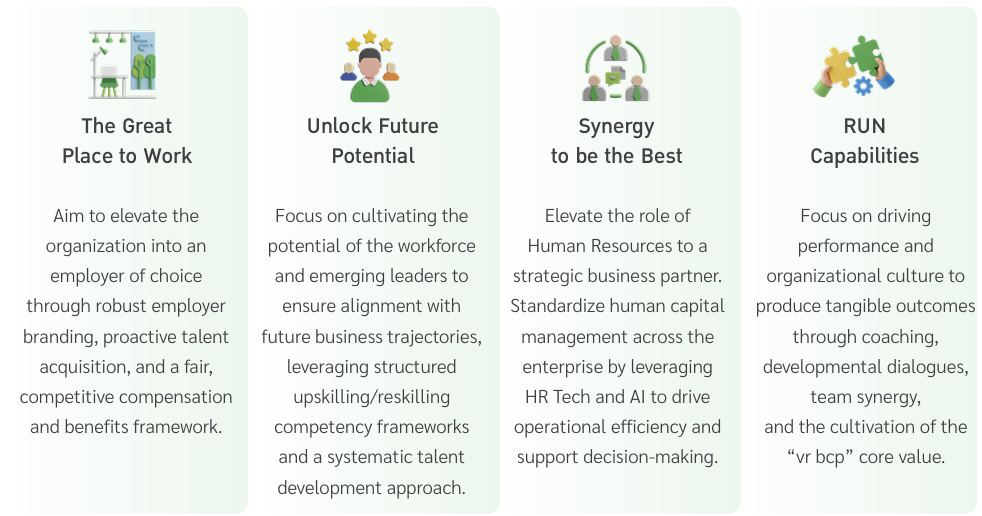
For Occupational Health and Safety Management, the Company operates under the Safety, Security, Health, Environment, and Energy (SHEE) Management framework. A dedicated committee is responsible for setting SHEE policies, providing reviews, recommendations, and resource support. Specialized working groups have also been appointed to ensure the continuous effectiveness and long-term sustainability of the SHEE management system. A safety management system is in place to enable proactive threat identification, risk assessment, and investigation of potential incidents, driving continuous improvement. The Company enforces mandatory safety audits both internally and externally. The internal audit includes monthly safety walkthroughs and progress meetings with the Safety Committee to report and monitor corrective actions, in strict compliance with legal requirements. The external audit involves standardized assessments based on ISO 45001, among others. The comprehensive safety management and monitoring systems cover 100% of employees and contractors operating at the Bangchak Phra Khanong Refinery and the two oil terminals. This reach encompasses 100% of the total production operational areas and corporate headquarters. The Company mandates that all employees and contractors adhere to the established SHEE policies, upholding individual and collective responsibility for safety. These directives are fully aligned with local regulations and international standards, including ISO 45001, and with the ongoing implementation of Process Safety Management (PSM).
Plan Areas
| Plan Area |
|---|
| Fair employee compensation |
| Employee training and development |
| Promoting employee relations and participation |
| Occupational health and safety in workplace |
Employees — Workforce
Workforce Data
| Metric | Current Year | Previous Year | Two Years Ago |
|---|---|---|---|
| Total number of employees (Persons) | 1,384 | 1,368 | 1,184 |
| Number of male employees (Persons) | 867 | 859 | 773 |
| Number of female employees (Persons) | 517 | 509 | 411 |
| Total employment of disabled persons (people) | 14 | 12 | 12 |
| Total disabled employees (people) | 12 | 12 | 12 |
| Total male disabled employees (people) | 4 | 4 | 4 |
| Total female disabled employees (people) | 8 | 8 | 8 |
| Total disabled workers who are non-employee (people) | 2 | 0 | 0 |
| Contributions to the fund for promoting and improving the quality of life for disabled persons | 0 | 0 | 0 |
| Total number of male employees in operational level (Persons) | 251 | 257 | 268 |
| Total number of male employees in management level (Persons) | 486 | 470 | 397 |
| Total number of male employees in executive level (Persons) | 130 | 132 | 108 |
| Total number of female employees in operational level (Persons) | 29 | 29 | 28 |
| Total number of female employees in management level (Persons) | 384 | 379 | 300 |
| Total number of female employees in executive level (Persons) | 104 | 101 | 83 |
Employees — Remuneration & Provident Fund
Remuneration & Provident Fund
| Metric | Current Year | Previous Year | Two Years Ago |
|---|---|---|---|
| Total disabled employees (people) | 2,765,348,211.06 | 2,750,409,547 | 2,164,162,433.41 |
| Total male employee remuneration (Baht) | 1,747,923,288.43 | 1,774,607,127 | 1,456,274,172.33 |
| Total female employee remuneration (Baht) | 1,017,424,922.63 | 975,802,420 | 707,888,261.08 |
| Number of employees eligible to participate in PVD (persons) | 1,300 | 1,291 | 1,136 |
| Total number of employees joining employee provident fund (Persons) | 1,299 | 1,291 | 1,136 |
| Percentage of total number of employees joining employee provident fund to total number of employees (%) | 93.86 | 94.37 | 95.95 |
| Number of PVD members / Total eligible employees (%) | 99.92 | 100 | 100 |
| Total amount of provident fund contributed by the Company (Baht) | 140,960,371 | 132,179,411 | 102,404,524 |
| Total amount of provident fund contributed by employee (baht) | 154,797,897 | 144,420,216 | 118,978,221 |
Employees — Training & Development
Training Data
| Metric | Current Year | Previous Year | Two Years Ago |
|---|---|---|---|
| Average employee training hours (Hours / Person / Year) | 26.2 | 27 | 35.75 |
| Employee development and training expenses (baht) |
Employees — Occupational Health & Safety
Occupational Health & Safety Data
| Metric | Current Year | Previous Year | Two Years Ago |
|---|---|---|---|
| Total number of lost time injury incidents by employees (Cases) | 0 | 0 | 0 |
Employees — Labour Relations
Labour Relations Data
| Metric | Current Year | Previous Year | Two Years Ago |
|---|---|---|---|
| Total voluntary resignations (Persons) | 44 | 38 | 34 |
| Male employees who voluntary resigned (Persons) | 26 | 23 | 19 |
| Female employees who voluntary resigned (Persons) | 18 | 15 | 15 |
| Percentage of employee turnover leaving the Company voluntarily (%) | 3.2 | 2.83 | 2.99 |
| Evaluation result of employee engagement | 1 | 1 | 1 |
Employees — Employee Representation
Employees Are Represented Collectively
Yes
Forms of Representation
| Form | Other — Please Specify |
|---|---|
| Employee committee | |
| Labor union | |
| Others | Forming groups/clubs based on interests, with over 20 clubs, and allocating a budget to support the activities of each club every year. |
Employees — Targets
Has Set Employee Targets
Yes
Targets
| Indicator | Target Areas | Target Year | Target Year — Description |
|---|---|---|---|
| Employee Engagement Score | 2985 · Description: Promoting employee relations and participation | 2,025 | Employee Engagement Score 77% |
| Work-Related Injuries | 2988 · Description: Safety and occupational health at work | 2,025 | Zero accident |
| Complaints on harassment and discrimination | 2989 · Description: Non-discrimination | 2,025 | No complaints |
Employees — Performance & Outcomes
Has Performance Results
Yes
Performance Description
Human Resource Management
The Company has revised and developed the "New Bangchak Competency" framework, while concurrently refining our personnel development processes to support the structural growth of our business. Our internal knowledge base has been fortified through a specialized Bangchak curriculum. Individual development goals are linked to the initiative via the "My Career Passport" system. This integration enables enhanced monitoring and measurement of learning outcomes (Learning Effectiveness) throughout the employee journey—from onboarding and operational skill-building to role readiness, leadership cultivation, and high-potential talent development. This is achieved via four core programs:
1. Bangchak NewX (Onboarding Program): An onboarding program designed to prepare new employees, fostering understanding of the business and organizational systems, enhancing engagement, and elevating operational readiness. It encompasses the entire journey from pre-boarding to probationary monitoring and relationship-building activities. Key performance indicators (KPIs) include probation pass rates, employee engagement and workplace cultural alignment, and supervisor satisfaction with new-hire readiness.
2. Bangchak ReadyX (Development Programs Catalog): A skills development program for all employee groups aimed at strengthening competencies in alignment with "Bangchak Competency" and individual development needs. This program bridges course selection with career objectives through "My Career Passport," which features a structured learning process—from goal setting and course matching to managerial review, participation, reflection, and impact summarization (Learning Impact).
3. Bangchak FutureX (Mandatory Programs): Compulsory programs tailored to each job level, designed to elevate Business & Internal Knowledge alongside the development of strategic competencies and leadership. This utilizes "Action Learning," providing employees with the opportunity to conceive, experiment, and present real-world projects that align with business direction.
4. Bangchak RiseX (Talent Development Program): A 30-week high-potential (Talent) development program designed based on Competency Gap analysis and linked to Business Drivers. It aims to cultivate the next generation of leaders, preparing them for critical roles in the future. Delivered through a "Blended Learning" format, it emphasizes experiential learning and individual development, resulting in a Talent Pool of 90 individuals across key functions to support the organization's long-term growth.
Upskilling Towards the Workforce of the Future and Enhancing AI Literacy
- Creating a Holistic Learning Ecosystem: Promote lifelong learning through a dedicated Online Learning platform and internal Knowledge Management System (BCP-KMS). This is bolstered by the establishment of Communities of Practice (CoP), which facilitates the continuous exchange of in-depth knowledge and experience with both internal and external subject-matter experts through on-site engagements at least once a year (there are currently 15 active CoP groups).
- Employee Scholarships and Career Development: Provide support for both full-time and part-time scholarships, encompassing a wide range of educational opportunities from short-course certifications to Master’s and Doctoral degrees, both domestically and internationally, in alignment with the Company’s eligibility requirements.
- Promoting Innovation, Design Thinking, and AI Literacy: Integrate Innovation and Design Thinking methodologies while rigorously elevating AI Literacy across all organizational levels. Guided by internal and external subject-matter experts, these initiatives are designed to drive operational efficiency, optimize cost structures, create added value, and harness innovation to open new business frontiers. These efforts are complemented by foundational skill development in Digital, Data Analytics, and AI. In 2025, our "AI Upskilling Program" successfully engaged over 1,000 employees across three proficiency tiers: AI Ignite, AI Elevate, and AI Mastery. Consequently, over 80% of the workforce can now use AI tools in practice. This is further catalyzed by our "Wrong DI" project, which drives innovation and digitalization through a mentorship model that pairs experienced staff with participants to facilitate the practical application of knowledge.
- Promoting Technical Expertise: The Bangchak Phra Khanong Refinery conducts specialized workshops in partnership with Oil Spill Response Limited (OSRL), a global authority in oil spill containment, to train relevant personnel. This includes rigorously testing and simulating emergency response protocols with OSRL international offices. Additionally, the annual "SHEE Excellence Day" is hosted to showcase and review our performance across Safety, Security, Health, Environment, and Energy metrics.
Performance Evaluation and Compensation Management
The Company is steadfast in its commitment to fostering an equitable and inclusive workplace (Diversity & Inclusion), which is a mechanism for compensation and advancement considerations. The mechanism prioritizes individual knowledge, competency, and performance during evaluations. The Company’s operations strictly adhere to labor laws, human rights principles, and international standards. Measures to maintain and prevent Gender Pay Gaps are in place, and regular audits of our compensation processes are conducted to ensure fairness for all employees in accordance with the Corporate Code of Conduct. Regarding our compensation management strategy and suitability analysis, to ensure our structure remains equitable and market-competitive, the Company has established an annual compensation review process based on a comprehensive multi-dimensional analysis as follows:
- Market Benchmarking: Perform rigorous compensation and benefits benchmarking against peers in the petroleum sector, related industries, and top-tier market leaders to maintain a competitive advantage and attract elite talent.
- Living Wage Analysis: Place a high priority on ensuring income security that meets the cost of living. By integrating external factors such as inflation rates and localized cost-of-living standards, equitable starting wages and benefits are established across all operational sites. Performance Outcomes: Our analysis of the Company’s compensation architecture reveals that entry-level wages, when aggregated with monetary benefits, significantly exceed statutory minimum wage requirements and comfortably surpass basic living wage benchmarks. This demonstrates our disciplined approach to balancing strategic human capital investment with operational cost efficiency. Through these proactive measures, we ensure that every employee receives a remuneration package that is fair, competitive, and sufficient to provide a stable foundation for their livelihood, thereby cultivating sustainable employee satisfaction and long-term organizational commitment.
Performance Appraisal System
Beyond stable base salaries, the Company determines individual compensation adjustments through a transparent annual performance management system, which comprises three core components:
- Key Performance Indicators (KPIs): Measuring the achievement of deliverables against established strategic targets. - Competency & Behavior: Assessing behaviors that align with the Company’s core values.
Furthermore, the Company utilizes a Multidimensional Performance Appraisal approach to ensure comprehensive data, including:
- Potential Assessment: Evaluating the readiness and future growth potential for employees at various levels, assessed by supervisors, peers, and relevant stakeholders from other departments (as appropriate).
- Team-based Appraisal and Agile Conversations: Emphasizing continuous progress monitoring and ongoing feedback exchange.
The Company employs a performance assessment framework meticulously tailored to the nature of our operations, ensuring a comprehensive and accurate reflection of performance. Key Performance Indicators (KPIs) are leveraged as the primary assessment instrument, underpinned by the Balanced Scorecard (Kaplan & Norton) framework. This encompasses four critical dimensions: Financial, Customer, Internal Process, and Learning & Growth. Our processes and outcomes are aligned with the rigorous criteria of the Thailand Quality Award (TQA). Employee KPI accountability is empowered across three interconnected tiers: Corporate, Business Unit, and Individual, effectively bridging individual efforts with enterprise-wide objectives to cement our foundation as a High-Performance Organization (HPO).
The Company maintains an equitable and non-discriminatory evaluation process that spans the entire performance lifecycle from strategic target setting and progress monitoring to collaborative performance reviews with supervisors. A culture of constructive feedback is encouraged. Through the "One-on-One" initiative, conducted at least four times annually, high-quality dialogues are facilitated between supervisors and team members—a program that achieved a 98% organization-wide participation rate. Furthermore, ongoing, informal feedback is supported through the "i am bcp Point" system, which utilizes the STAR (Situation–Task–Action–Result) framework.
Performance outcomes serve a dual purpose: they inform compensation adjustments while simultaneously driving the development of potential, expertise, and skills, as well as robust career progression planning. "High Potential & Fast Track" criteria are in place, which evaluate promotion based on historical performance metrics, demonstrated growth potential, and successful completion of designated Bangchak FutureX (Mandatory Programs). This strategic approach is designed to incentivize excellence and foster sustainable professional growth within our workforce.
Employee Engagement Management
The Company remains steadfast in designing comprehensive benefits and executing strategic human capital initiatives to elevate employee engagement and organizational commitment. These efforts are unified under our "100x Happiness" approach, harmonized with the continuous promotion of our "vr bcp" corporate values. The objective is for enterprise-wide implementation, with a clear mandate to scale these best practices across our group of companies, centered around the "4 Dimensions of Happiness", as follows:
Happiness Dimension 1: Happy Stay – Living with Peace of Mind
Strategically upgraded workplace infrastructure to foster a flexible, health-conscious, and ergonomic work environment (Ergonomic Workspace). Set up collaborative co-working spaces and dedicated office pods to support agile working methodologies and improve the privacy of discussions and meetings.
Happiness Dimension 2: Happy DNA – Happy Development Through "vr bcp"
Promote a sense of ownership and understanding of the "vr bcp" core values through the "Core Value Journey" plan. Communicate behavioral expectations via the "vr bcp" Story, our Core Value Manual, and interactive workshops to embed these values into daily workflows. Enhance employee engagement by integrating "vr bcp" principles into each business unit's specific activities and establishing Organizational Culture KPIs.
Happiness Dimension 3: Happy Me –Caring with Happiness
Enhance employee benefits to provide comprehensive support for health and quality of life across multiple dimensions, such as:
1. Promoting Work-Life Balance
- Encouraging Utilization of Annual Leave*: Promote 100% use of paid annual leave. Provide flexibility to carry over unused leave through March of the subsequent year.
- Superior Family Leave Entitlements: Family leave policies significantly exceed statutory requirements. Female employees are granted a total of 120 days of maternity leave, of which 98 are fully paid (exceeding the 60-day statutory mandate). Male employees are entitled to 1 day of leave for the spouse's delivery and 15 days of paid paternity leave.
- Additional Leave Entitlements: Provisions for personal leave, sick leave, and birthday leave. Note: Annual leave may also be utilized to care for ill family members.
2. Health and Holistic Wellness Benefits
- Comprehensive Medical Coverage: Extensive medical insurance (IPD/OPD) that extends coverage not only to employees, spouses, and children but also to parents, complemented by dental benefits for both employees and family members.
- Health Assurance & Security: Life insurance, accident insurance, and Social Security Fund contributions.
- Proactive Healthcare Management: A comprehensive suite of wellness initiatives, including age-appropriate annual health screenings, on-site medical infirmary services, monthly specialized clinics and medical advisory sessions, seasonal influenza vaccinations, therapeutic massage, mobile dental clinics, and online psychiatric consultation. 3. Financial Security and Assistance Benefits
- Long-term Financial Stability: Provident Funds/Gratuity Funds and specialized housing loan benefits.
- Comprehensive Welfare and Assistance: Financial assistance and welfare benefits, education grants and allowances for children, bereavement assistance, income replacement for non-occupational disability, and dedicated disaster relief support.
- Recognition and Tenure Excellence: Long Service Awards reflecting appreciation for enduring dedication to the organization.
Happiness Dimension 4: Happy Heart – The Joy of Caring Foster comprehensive communication and deep employee engagement through the following key mechanisms:
- BCP Town Hall: Serving as a vital channel to communicate strategic direction, operational performance, and critical corporate issues directly from senior management (4 sessions in 2025). Town Hall meetings are held for all business units.
- CEO Box: A channel dedicated to collecting anonymous feedback and ideas. Personally replied to by the CEO.
- Restructuring and Retirement Practices: In instances necessitating workforce adjustments, the Company provides a minimum of 60 days’ notice and adheres strictly to statutory severance requirements. These practices are documented in the employee handbook and subject to joint review by employee representatives and management. Early retirement programs for employees aged 55 and above are offered, supported by pre-retirement preparation initiatives.
- “Me Money” Project: A specialized program for employees aged 45 and above and those preparing for retirement, designed to bolster long-term financial security. The initiative covers areas such as financial management, fund and tax strategies, and holistic retirement planning—integrating financial stability with physical and mental well-being—and is complemented by personalized financial counseling clinics.
- Relationship-Building and Engagement Activities: Organize year-round events to foster the relationship between senior executives and staff, actively inviting employees to co-design the activities. For example, the “Fynergy Game” serves as a platform for team bonding through sports competitions and cheering squads, promoting unity, collaboration, and strong interpersonal relationships.
Our systematic approach in 2025 has yielded an employee engagement score of 78%. This performance has been recognized through several industry accolades, such as:
- Best Employer Mercer Thailand 2025 Award: The Company has been honored with this award for the second consecutive year—the first in the Thai petroleum industry to achieve this recognition, and to do so twice consecutively—reflecting our excellence in employee care. Notably, our engagement survey saw a 99% participation rate.
- HR Asia Best Companies to Work For in Asia 2025 Award: The Company has secured this recognition for the fourth consecutive year, along with two other awards:
o HR Asia Most Caring Company: For the third consecutive year.
o HR Asia Most Sustainable Workplace: For the second consecutive year. - HR Asia Tech Empowerment Award: Received in its inaugural year, this award underscores our commitment to integrating innovation and technology to enhance operational efficiency and build future-ready capabilities for our workforce.
- Outstanding Establishment Awards (from the Ministry of Labor) in the areas of:
o Safety and Occupational Health: Awarded for the 9th consecutive year.
o Labor Relations and Welfare: Awarded for the 2nd consecutive year.
Human Rights
The Company recognizes the paramount importance of systematic human rights and environmental management. Our business operations are anchored in respect for the rights of all stakeholders, embrace gender identity diversity (LGBTQ+), and foster an inclusive environment that values diverse perspectives and social equality across religion, race, and nationality. We extend this commitment to vulnerable groups—such as persons with disabilities, children, and indigenous peoples—while maintaining a deep respect for the environment. To ensure business integrity, we proactively prevent risks and impacts related to human rights and environmental violations. Consequently, the Company has established a Business Responsibility Policy for Human Rights and the Environment and strictly adheres to international human rights frameworks. This policy serves as the operational roadmap for the Board of Directors, executives, and employees at all levels. In 2025, there were no widespread complaints regarding human rights violations or discrimination.
Safety, Occupational Health, and Working Environment
The Company is committed to elevating safety standards by implementing the Process Safety Management (PSM) system. Significant progress in key 2025 initiatives include:
1. Safety Culture & Leadership
- Felt Leadership (FL): Encouraging executives and supervisors to serve as visible role models in safety leadership. - Field Risk Assessment (FRA): Empowering personnel to identify on-site hazards for immediate prevention and corrective action.
2. Risk Management & Standards
- Implemented and enforced critical safety standards, including Lock Out Tag Out (LOTO), Line Break (LB), Hot Work (HW), Confined Space Entry, and Excavation.
- Process Hazard Analysis (PHA): Continuously conducting hazard analyses to identify risks and define prevention measures, including the scheduled 5-year PHA Revalidation for Production Unit 3.
- Process Safety Information (PSI): Maintaining up-to-date safety data as a foundation for hazard identification and understanding.
3. Asset Integrity & Quality
- Mechanical Integrity (MI): Monitoring equipment efficiency and hazard control throughout its life cycle, including preventive maintenance.
- Quality Assurance (QA): Verifying that new or additional equipment meets design specifications for safe operation. - Pre-Startup Safety Review (PSSR): Assessing equipment readiness before commissioning to ensure maximum safety.
4. Management of Change
- MOC Technology-Facilities (MOC-T,F): Managing technological and mechanical changes through expert risk assessments and clear communication with operators.
- MOC Personnel (MOC-P): Managing personnel changes to ensure operators possess the requisite readiness and competency.
5. Competency & Emergency Readiness
- Training and Performance (T&P): Developing personnel potential and certifying "Qualified Persons" to authorize high-risk tasks.
- Emergency Planning & Response (EPR): Conducting regular emergency response training and drills to ensure real-world readiness.
6. Contractor Safety Management (CSM) - Elevating contractor safety through rigorous selection, on-site audits, and post-contract evaluations.
7. Incident Investigation (II)
- Performing intensive Root Cause Analysis for every incident to establish systemic prevention measures and prevent recurrence.
8. Digitalization in PSM
- Utilizing centralized digital safety data to accelerate information access and enhance strategic safety planning accuracy.
The Company promotes a "24-Hour Safety" culture, ensuring all employees and contractors maintain safety awareness in every aspect of their daily lives.
- Safety Culture Transformation is driven by executive Line Walks, Field Risk Assessments (FRA) for proactive hazard identification, and joint site inspections with contractors. These efforts stimulate safety awareness and verify compliance to eliminate unsafe actions and conditions.
- Weekly joint site inspections and monthly meetings are held with contractor safety officers.
- The Contractor Safety Management Recognition Award honors contractors who demonstrate exemplary adherence to safety procedures.
- Collaborative safety goals are established through the "Buddy Manager" project between the Company and contractors.
- Milestones for lost-time injury-free work hours are celebrated across the workforce.
- The Safety Committee, with equal representation from employees and management, meets monthly to resolve safety issues directly and conduct joint site inspections.
- Safe driving campaigns promote helmet and seatbelt use, extending the safety culture beyond working hours.
Sustained safety efforts have resulted in 11,000,000 safe man-hours without lost-time or medical-treatment injuries, a record maintained since 2018. For the 9th consecutive year, the Company received the National Outstanding Establishment Award for Safety, Occupational Health, and Working Environment from the Ministry of Labor, underscoring our commitment to continuous improvement.
Customers — Plan & Guidelines
Has a Customer Management Plan
Yes
Plan Description
The Company remains committed to developing products and services that meet consumer needs. We continue to execute our plan to build confidence among both existing and new Bangchak customers. This includes rebranding and enhancing the image of over 2,000 service stations under the 'Bangchak' brand, standardizing service excellence, and maintaining strict quality control. Our product development and customer experience are driven by the concept 'Your Greenovative Destination for Intergeneration.' We aim to lead in green innovation through a diverse range of products and services, positioning ourselves as a comprehensive destination for all customer needs while driving sustainable business growth. Our core competencies focus on 1) responding to the needs and expectations of customers, partners, and entrepreneurs, 2) sourcing and developing innovations in fuel products, non-oil offerings, and other services to ensure rapid adaptability, and 3) conducting business with environmental and social responsibility through four key strategies.
Strategy 1: Expand and modernize the service station network to maximize customer accessibility. Goal: Become the #1 brand in consumers' hearts, driving sales growth and securing the #2 market share position.
Strategy 2: Develop high-quality, eco-friendly fuels aligned with modern automotive technology. Goal: Lead the market in premium green fuels to attract sustainability-conscious consumers.
Strategy 3: Continuously expand non-oil offerings to transform service stations into integrated destinations. Goal: Diversify the customer base through Inthanin coffee, convenience stores, renowned food partners, and EV Chargers.
Strategy 4: Elevate Customer Experience at every touchpoint to maximize satisfaction and loyalty.
Goal: Deliver exceptional service standards and enhance the "Bangchak Green Miles" loyalty program to meet evolving consumer expectations. Goals: To deliver an exceptional service experience through premium quality standards, while elevating the Bangchak Green Miles membership into "The Best Loyalty Program” meticulously designed to resonate with evolving consumer needs and exceed market expectations.
Plan Areas
| Plan Area |
|---|
| Responsible production and services for customers |
| Development of customer satisfaction and customer relationship |
| Protection of customer personal information |
Customers — Satisfaction Results
Customer Satisfaction Results
| Metric | Current Year | Previous Year | Two Years Ago |
|---|---|---|---|
| Evaluation results of customer satisfaction | 1 | 1 | 1 |
Customers — Targets
Has Set Customer Targets
Yes
Targets
| Indicator | Target Areas | Target Year | Target Year — Description |
|---|---|---|---|
| Customer satisfaction | 3009 · Description: Development of customer satisfaction and customer relationship | 2,025 | 4.57 out of 5.00 |
Customers — Performance & Outcomes
Has Performance Results
Yes
Performance Description
Key Initiatives | 2025 Results |
Improve and elevate service station potential Develop and upgrade standard service stations due for renovation, as well as community gas stations, to meet standard service station benchmarks. Support the improvement of station standards and brand image to ensure competitive readiness in both infrastructure and service quality." | Renovated and upgraded |
Continuous Expansion of Service Stations We are continually expanding the "Bangchak" service station network to meet consumer demand. This includes the rollout of our Unique Design Service Stations, which feature distinctive architecture designed to serve as local landmarks in each area. | Service Stations: Expanded to Unique Design Stations: 103 locations. |
All fuel products now meet the EURO 5 standards To support government initiatives, our fuels have been upgraded to the EURO 5 standard. This helps lower sulfur levels and harmful emissions such as hydrocarbons and nitrogen oxides, while reducing PM 2.5 pollution. We aim to deliver high-quality fuel that meets our customers' needs while protecting public health and the environment. | Market share through service stations has steadily increased to 28.9%. |
Premium Fuel Leadership: Driving the sales volume of our flagship offerings, Hi-Premium Diesel S and Hi Premium 97, through strategically integrated marketing campaigns. We have aggressively expanded our network of service stations offering these premium-grade fuels while fortifying product brand equity and consumer confidence. A key milestone in our quality assurance strategy is the partnership with AAS Auto Service, which exclusively selects Bangchak Hi Premium 97 as the first fuel for every Porsche, Bentley, and Harley-Davidson before they depart the showroom. Furthermore, we have executed high-impact promotional activities, such as "Purple Day," offering a 3-baht-per-litre discount on premium fuels every Monday since May. Additionally, customers who refuel with premium products for 1,000 baht or more receive a 100-baht discount coupon—a tactical initiative designed to accelerate product trial and convert consumers to Bangchak’s high-performance, superior-quality innovations. | Premium segment market share |
Lubricant Excellence: Developing lubricant products to meet global standards, underscored by the prestigious ISO 9001 certification for Quality Management Systems and the ISO/TS 16949 certification for Automotive Quality Management Systems. | Commanding a 12.1% market share in the lubricant segment, complemented by the strategic launch of "HERCuRO," a premium product line specifically engineered for the heavy-duty truck sector. |
Inthanin Coffee: Inthanin Coffee is a pioneer in the eco-friendly coffee business, committed to the "Green Coffee Shop" concept. The brand features 100% Organic Arabica beans and actively advocates plastic reduction through the "Bring Your Own Cup" initiative, aimed at minimizing single-use packaging. Furthermore, Inthanin has introduced "sip-through" lids to eliminate straw consumption and has implemented solar-powered air conditioning systems to enhance energy efficiency and uphold its environmental stewardship. | Aggressively expanding the Inthanin footprint, currently operating |
Convenience Stores: Developed convenience stores under the 'Lemon Green' brand and collaborated with business partners to operate 112 'Big C Mini' outlets, 125 'Lemon Green' outlets, and other mart locations. | 345 stores |
Leading Brand Restaurants and Lifestyle Business Portfolios Our food business group synergizes with premier brands and award-winning culinary partners, including acclaimed names such as "Nai Ouan Yentafo," "Jeh Dang Sam Yan," and "Khua Kling Pak Sod." Furthermore, our portfolio extends into the Health and Wellness sector, encompassing a diverse range of lifestyle offerings, from pharmacies to optical boutiques. | 1,400 outlets |
EV Charging Stations Collaborating with strategic business partners to expand the EV charging network within Bangchak service stations, reinforcing our position as a "Greenovative Destination" and proactively capturing the exponential growth of the Electric Vehicle (EV) market. | 543 service stations |
Elevating Service Excellence at Service Stations and Standardizing Service Consistency Prioritizing customer experience by highlighting the "Wai"—a unique hallmark of Thai hospitality. We emphasize the traditional "Wai" greeting to welcome customers across all service stations, supported by a systematic performance evaluation via QR codes on sales slips. This allows customers to provide satisfaction ratings and specifically vote for the "Wai" service excellence. | Satisfaction score of 4.78/5.00 |
Personalized Marketing for Loyalty Members Leveraging data analytics to gain deep insights into target audience behaviors and preferences, the Company implements Personalized Marketing strategies specifically designed for members with declining engagement to stimulate service reactivation. This includes curated value-added offerings, such as bonus points upon achieving specified fueling milestones, as well as promotional campaigns tailored to individual purchasing patterns. | Bangchak Green Miles membership reached 8 million members |
Driven by an unwavering commitment to developing products and services that exceed consumer expectations, the “Bangchak” brand has been honored with the Superbrands Thailand award for the 7th consecutive year. This prestigious recognition stems from the remarkable success of “Bangchak Hi Premium 97,” our highest-quality premium fuel and most advanced formulation to date. Engineered to elevate driving performance, it ensures optimized combustion, superior engine responsiveness, and exceptional engine cleanliness. Furthermore, the Company’s excellence has been solidified by the Thailand Corporate Excellence Awards 2025, which awarded it in both the Marketing Excellence and Product/Service Excellence categories. Beyond operational success, the Company integrates sustainability into its core business strategies. We empower and generate income for the agricultural sector through a network of over 600 Community Service Stations. Our innovative “Fry to Fly” initiative facilitates the collection of used cooking oil at Bangchak service stations to produce Sustainable Aviation Fuel (SAF). Additionally, we take pride in being Thailand’s pioneer in the production and distribution of B24 Marine Biofuel. This breakthrough product significantly reduces greenhouse gas emissions, directly supporting global sustainability targets within the maritime industry.
Customer Satisfaction
2023 | 2024 | 2025 | |
Customer Satisfaction Score | 4.16 | 4.51 | 4.78 |
Community & Social — Plan & Guidelines
Has a Community & Social Plan
Yes
Plan Description
The Company operates in accordance with its policy on integrating business development with environmental and social responsibility. We actively listen to the community through annual opinion surveys conducted by independent third parties. These activities engage communities close to the Bangchak Refinery in Phra Khanong, our primary operational site. The survey results are utilized to define community relations strategies and action plans. Furthermore, we assess social and environmental impacts on neighboring communities through a two-phase survey process:
Within a 5-km radius as per the Environmental Impact Assessment (EIA).
Within a 1.5-km radius for intensive community engagement.
Both phases of the survey were conducted to gather data on community opinions, expectations, and needs, as well as their perception of the company. The survey also aimed to assess potential impacts on society, safety, and the environment. The results will be used to define strategies and operational guidelines for the Production Operations Department, the Safety Division, and Community Relations activities. This ensures that the company can address stakeholder needs comprehensively and effectively resolve specific community concerns.
Plan Areas
| Plan Area |
|---|
| Employment and professional skill development |
| Education |
| Religion and culture |
| Forests and natural resources |
| Sports and recreation |
| Occupational health, safety, health, and quality of life |
| Disadvantaged and vulnerable groups |
| Reducing inequality and promoting social equality |
Community & Social — Targets
Has Set Community & Social Targets
Yes
Targets
| Indicator | Target Areas | Target Year | Target Year — Description |
|---|---|---|---|
| Community Engagement | 3045 · Other name: Community Engagement · Description: Others | 2,025 | 89% |
Community & Social — Performance & Outcomes
Has Performance Results
Yes
Performance Description
The Company executes programs across eight key areas to meet the needs of our neighbors:
Quality of Life & Vulnerable Groups: Addressing an aging society through health check-ups, cyber-safety training for seniors, and family-wellness activities.
Relationship Building: Community visits, mobile outreach, and the "Bangchak Kid Camp".
Education: Youth scholarships, STEM activities, ECO School initiatives, and AI/digital training for teachers.
Safety: Firefighting and emergency evacuation drills for communities and schools, with specialized plans for vulnerable and bedridden residents.
Environment: Mobile Environment Education Units (EEU), firefly conservation, and support for agricultural stingless bee groups.
Economic Empowerment: Vocational training, support for new entrepreneurs, and used cooking oil collection to generate community income.
Sports and Music: The Bangchak Youth Football Club nurtures over 120children, providing professional coaching and educational opportunities.
Public Interest: Children’s Day activities; supporting community service and cleaning initiatives within the neighborhood; and supporting various events organized by the Phra Khanong and Bang Na District Offices—such as Valentine’s Day events and Marriage Equality celebrations, as well as supporting the Organic Agriculture Learning Center at Soi Wachiratham Sathit
Social Stewardship and Community Engagement
The Company actively participates in national-level social and environmental stewardship through its BCP NET strategy. This is achieved by executing projects and initiatives under the “C: Conserving Nature and Society” pillar, which focuses on developing natural carbon sinks and sequestration through both terrestrial and marine ecosystems. In collaboration with a diverse range of partners, the Company continues to scale its Green & Blue Carbon initiatives and the “NET: Net Zero Ecosystem” roadmap. This collaborative drive ensures that both internal and external stakeholders are well-equipped with a deep understanding of greenhouse gas emission targets and carbon mechanisms—encompassing carbon trading systems, taxation, and carbon credits. Furthermore, the Company promotes corporate and individual carbon footprint calculations through the pivotal role of the Carbon Markets Club (CMC) and its strategic alignment with the ASEAN Common Carbon Framework (ACCF).
Community and Social Outcomes
Outcome / Year | 2023 | 2024 | 2025 |
Community Engagement (%) | 89 | 89 | 91 |
Community Satisfaction (%) | 96.3 | 95.1 | 96.0 |
Law Violation Incidents
Law Violation Incidents
| Metric | Current Year | Previous Year | Two Years Ago |
|---|---|---|---|
| The total number of cases or incidents of significant violations of laws or regulations regarding social and human rights (Cases) | 0 | 0 | 0 |
| The total number of cases or incidents that cause significant labor disputes (Cases) | 0 | 0 | 0 |
| The total number of cases or complaints related to consumer rights violations (Cases) | 0 | 0 | 0 |
| The total number of cases or complaints related to partner rights violations (Cases) | 0 | 0 | 0 |
| The total number of cases or incidents that cause disputes with the community/society (Cases) | |||
| The total number of cases or incidents related to cyber security or customer data breaches (Cases) | |||
| The total number of cases or incidents related to safety and occupational health at work (Cases) |